
Wekerle Plusz: what is known on 28 October 2026?
The value of a home depends on more than its purchase or renovation. Long-term running costs, construction quality and manageable financing matter just as much. Wekerle Plusz brings together housing loans, energy renovation and housing savings. These are different mechanisms: a subsidised loan must be repaid, an energy grant conditionally reduces loan principal, and a savings plan builds funds over time.
This guide draws on the official programme page checked on 28 October 2026, the published text of Government Decree 298/2026 (27 October), and related government information. It is not a complete legal or banking guide. The calculator has no connection to banking systems and its parameters do not update automatically.
When are the schemes due to start?
The purchase and construction loan decree enters into force on 28 October 2026; actual application availability must be confirmed with the chosen lender. Announced starts are January 2027 for savings support, February 2027 for the Family Home Programme and March 2027 for the Condominium and Panel Programme. We therefore treat these three future schemes as preliminary planning scenarios.
Purchase and construction: the loan framework
The decree permits loans of up to HUF 50 million over a maximum 25-year term. The customer’s annual interest rate is capped at 3% for new homes and 5% for existing homes; the calculator uses those caps. These are not APR figures: fees and other costs require separate consideration. Eligible purposes may include building or purchasing a qualifying home, single-dwelling house, homestead or estate residence in Hungary. Refinancing existing debt is not modelled.
Applicants must have legal capacity and meet the age requirement from their 18th birthday up to their 45th birthday at application. Hungarian citizens and people with the residence statuses specified in the decree may apply. Marriage, a commitment to have children and several years of social insurance history are not requirements. Income, creditworthiness and collateral remain subject to lender assessment.
The loan can be used once per applicant. For joint applications by spouses or partners, both applicants’ conditions are assessed. Parents or siblings may join as co-debtors but cannot acquire ownership in that capacity. Rules on criminal records, public debts and debts recorded in the KHR credit system must also be satisfied. Certain previous orders to repay housing support can exclude an applicant, with specified exceptions.
Existing ownership, equity and property values
As a general rule, current or past ownership of at least 50% of a dwelling is disqualifying. Joint applicants’ current or former shares in the same dwelling are combined. The decree contains exceptions, including a dwelling valued at no more than HUF 30 million, demolished property or property subject to a demolition order, and certain ownership interests subject to statutory usufruct. Valuation and supporting evidence are essential; a partial ownership interest alone does not establish eligibility.
The total purchase price or construction cost is capped at HUF 100 million for an apartment and HUF 150 million for a single-dwelling house, homestead or estate residence. The initial decree limit is HUF 1.5 million gross per square metre of legally defined usable floor area, with first indexation scheduled for 1 January 2028. The calculator neither establishes statutory floor area nor values property.
The decree requires at least 10% equity, with an exception for suitable additional collateral and subject to income and loan-to-value rules. This does not guarantee that a bank will finance 90%. The HUF 50 million cap, valuation and credit assessment may require more own funds. Where earlier government announcements differ on price per square metre or financing ratios, this guide follows the published decree.
Commitments, documentation and costs
A five-year main-residence obligation and restrictions on letting or other uses generally apply. Exceptions and the consequences of selling must be assessed under the decree and the contract. Insurance and security obligations also apply. Breaches may lead to loss of the interest subsidy and repayment obligations.
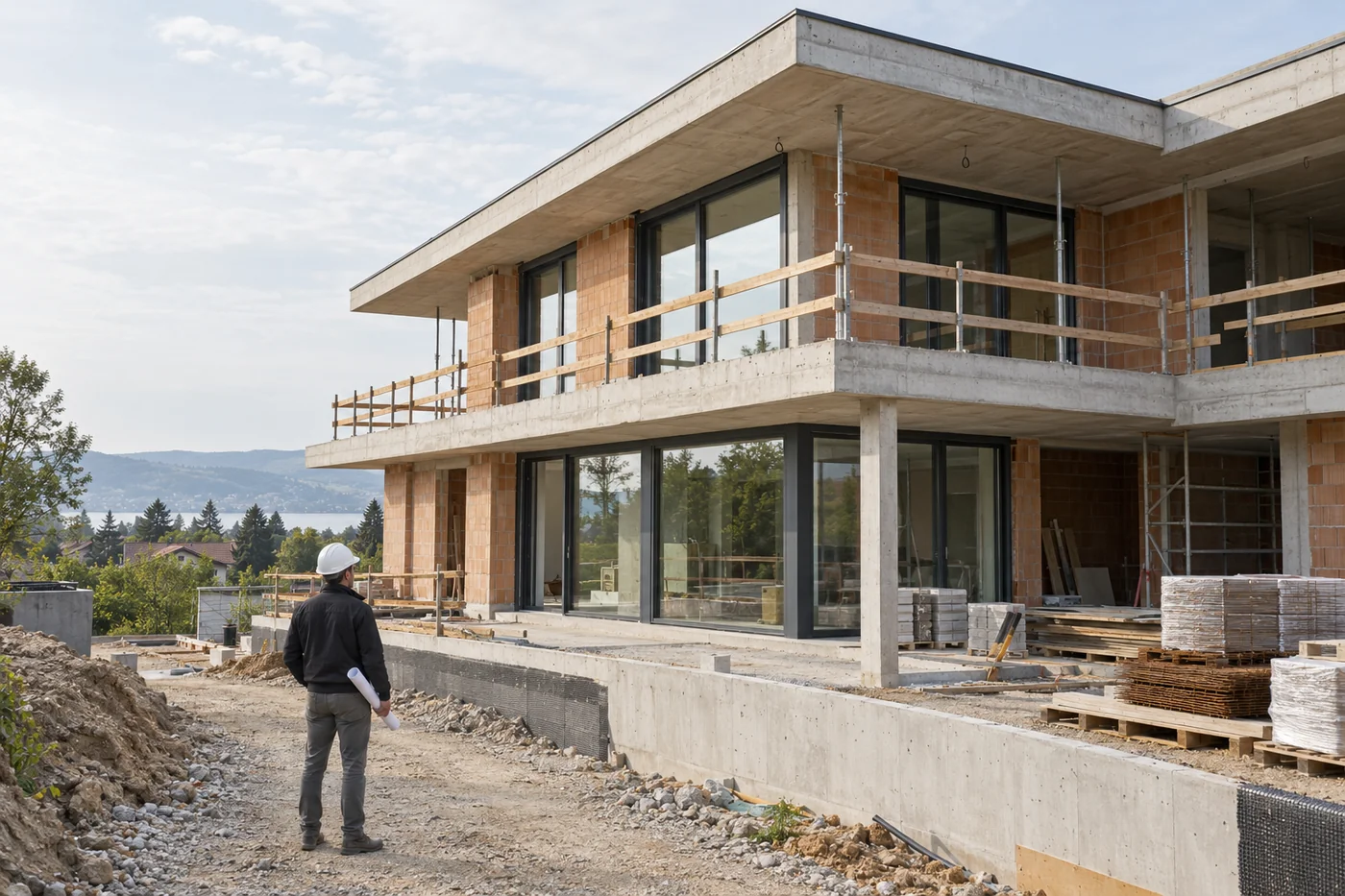
Purchase and title documents are important for acquisitions. Construction requires the relevant permit or notification, a lender-approved budget and evidence of progress and invoices. The definition of a new home, first sale, suitability for habitation and relationships with the seller or contractor are also checked. Separate rules govern the allowable difference between purchase price and lender valuation.
The decree caps lender fees for application and disbursement at HUF 30,000, excluding valuation and site inspection charges. Prepayment charges may not exceed 1% of the amount prepaid. Notarial, insurance and other related costs may arise; the calculator excludes them. Obtain an itemised lender offer and APR disclosure separately.
Energy renovation: measured performance matters
The announced grant requires energy certification before and after works, invoiced costs and at least 30% energy savings. The government announcement specifies primary energy savings and, for individuals, property that is at least half owned by the applicant. This does not mean a guaranteed 30% reduction in utility bills. An energy assessment must substantiate the improvement.
The programme page describes grants of 30% of the loan for initial D–G ratings and 50% for H–I ratings, applied as a prepayment against principal. This is not unrestricted cash paid upfront. Our calculator therefore shows repayments before the grant, then models a principal reduction only after a selected, hypothetical monthly payment.
Family Home Programme: announced terms
The announced scheme is for individuals regardless of age, covering detached, terraced and semi-detached homes and individually heated flats in small residential buildings. It provides for loans up to HUF 15 million over 15 years at a fixed annual 3%. Equity in addition to the loan is 5%, capped at HUF 500,000. For A–C ratings we model a loan without a grant; D–G and H–I scenarios also show the conditional principal reduction.
Listed works include insulation, windows, lighting and shading, domestic hot water systems, heat pumps or efficient split air conditioning, and thermostatic valves. Gas boilers are excluded. The programme page limits solar PV to 20% of the grant. Design, technical supervision and application advice also appear in the list; detailed eligible-cost rules must be checked against the final scheme documentation.
Condominium and Panel Programme: a shared project
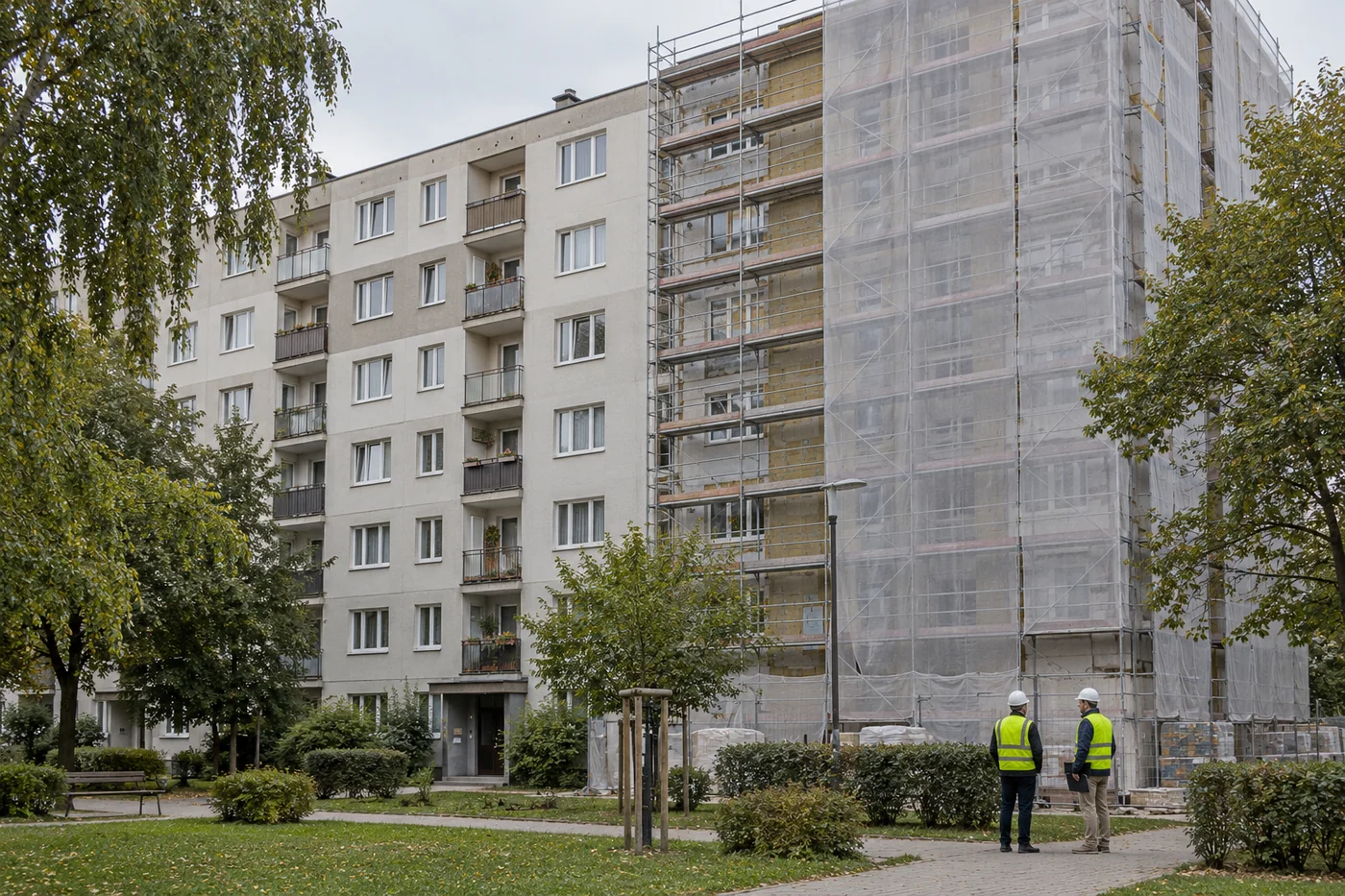
The programme page describes interest-free loans for condominiums and housing cooperatives of up to HUF 4 million per home in panel buildings or HUF 5 million in brick buildings, over 15–20 years. Equity is HUF 200,000 per home. Grant percentages depend on the initial energy rating; this page excludes A–C buildings. The calculator shows whole-building figures and an illustrative equal-share average per home.
Shared works also include district heating improvements, central building heating, cost allocators, energy upgrades to lifts and accessibility measures. The programme page indicates a 20%-of-grant limit for solar PV and accessibility. Owners’ decisions, allocation of financing and a coordinated technical scope require advance preparation.
Unresolved details: the government announcement of 27 October 2026 refers to 15 years and ratings C or worse, whereas the dedicated programme page states 15–20 years and excludes A–C. The announcement also mentions occupancy permission, owner applications, five-year residence and sale/letting restrictions, and assessments starting in the second quarter of 2027. We do not treat these as interchangeable final rules: the calculator uses the dedicated programme page, and actual eligibility requires clarification against the final scheme documentation.
Home savings: preparing for a future project
The announced savings period is 5–10 years. State support is described as 10% of contributions in years 1–5, capped at HUF 120,000 annually, then 20% in years 6–10, capped at HUF 240,000 annually, alongside deposit interest of at least 3%. Housing purposes include purchase, construction and energy-efficient renovation. The calculated maximum grant across ten years is HUF 1.8 million.
The calculator assumes equal month-end deposits and 3% effective annual interest on own contributions. It adds no interest to grants and deducts no fees or taxes. This separates deposits, grants and interest, but does not predict the maturity value of a specific savings contract.
What about Otthon Start applications already in progress?
The official programme page and the new section 33 of the Otthon Start decree indicate a 15 November 2026 application deadline for purchase agreements signed, or construction permit procedures or notifications initiated, by 31 October 2026. Section 58 of the Wekerle decree contains a different time reference, so confirm the precise transitional procedure promptly with your lender. This article does not guarantee a deadline. Existing Otthon Start contracts should not be assumed to terminate or convert automatically.
Where should a construction or renovation project begin?
Start with the property’s condition, constraints and actual requirements. For energy renovation, heat-loss reduction, windows, building services and ventilation must work together. A visually impressive component alone does not demonstrate the required saving. For a new build, bring permitting, technical design and financing schedules together early.
Toldy Construct’s approach centres on a detailed technical scope, a transparent budget and supervision of construction quality. Discuss technical preparation and delivery with us; loan and grant eligibility is determined by the lender or competent authority. Bespoke materials and higher architectural quality still require careful checks against price ceilings and eligible costs.
Before signing a contract
Obtain written lender information on actual product availability, all costs, documentation and own funding. Prepare an itemised construction budget and a realistic schedule. For grant-dependent renovation, establish certification, invoicing and grant-credit requirements in advance, including how works will be financed before the grant is credited.
Sources
Wekerle Plusz hivatalos programoldal
Magyar Közlöny 2026/159, 298/2026. (X. 27.) Korm. rendelet, 5420–5441. oldal