Modern skyscrapers use complex structural and fire-protection systems. These can improve resilience, but the outcome of an extreme event cannot be predicted from a building’s height or age alone. A blanket claim that a high-rise cannot collapse after an attack would be misleading.
What determines the consequences?
The structural system, the location and extent of damage, the capacity of affected components and the development of any subsequent fire all influence building behaviour. Assessing the actual condition requires building-specific information and expert investigation.
The role of the structural core
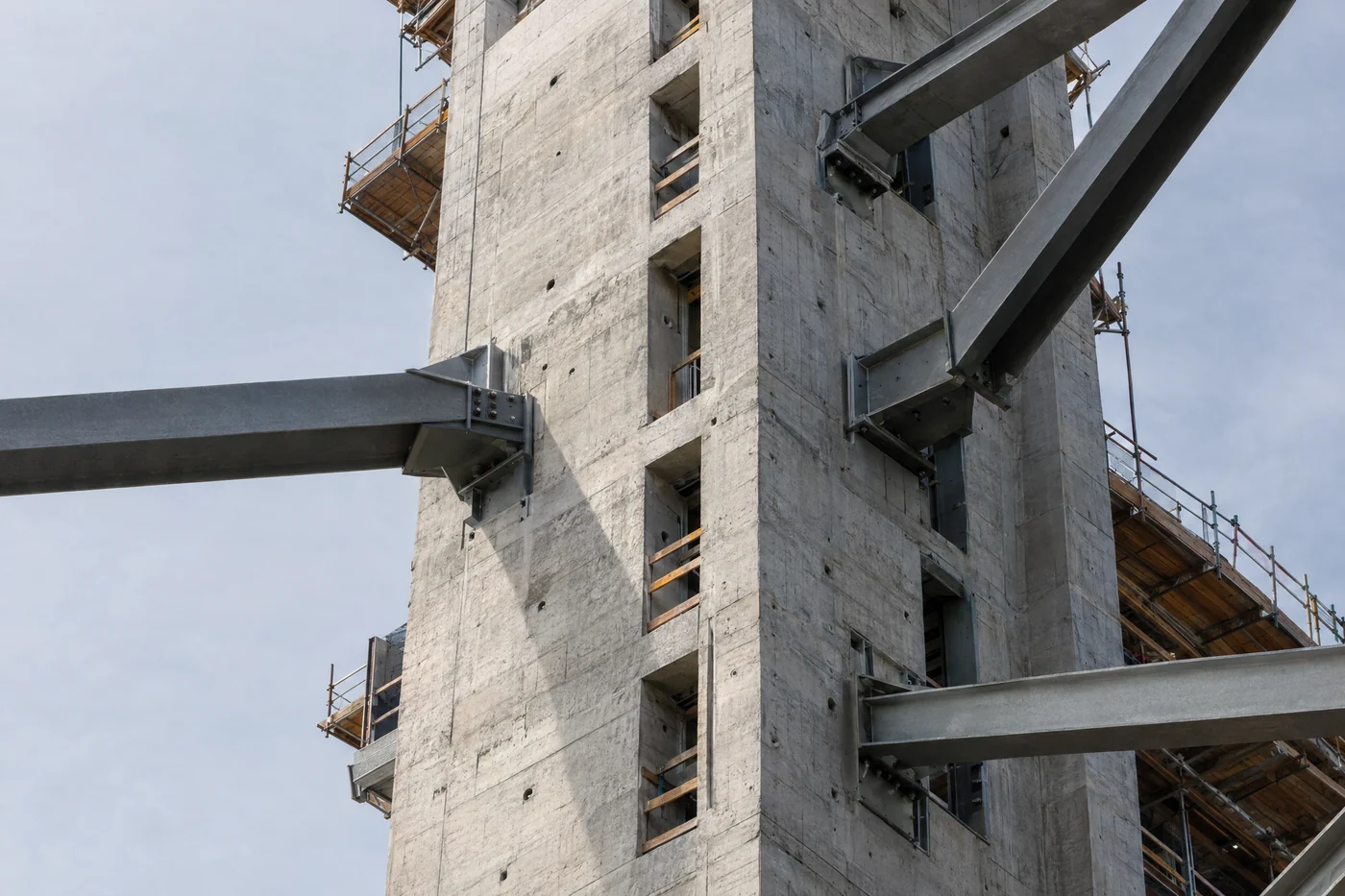
A high-rise core often plays a major role in resisting vertical and lateral loads. Burj Khalifa, for example, uses a buttressed reinforced-concrete core. The system supports the building under its design loads; it does not provide immunity to every possible extreme event.
Alternative load paths and structural robustness
A robust structure aims to prevent local damage from causing disproportionate failure. Alternative load paths and suitable connections can help redistribute forces. Their capacity is finite, however, so structural redundancy should not be presented as an unconditional guarantee.
Why fire protection matters
Fire damage does not depend solely on whether a material melts. Steel can lose strength and stiffness well below its melting point, and concrete can also deteriorate at high temperatures. Protective coatings, compartmentation and suppression systems therefore contribute to structural safety as well as fire safety.
Escape routes and refuge areas
Protected escape routes and, where required by the design, refuge areas support evacuation and fire safety. They should not be described as universally blast-proof shelters or self-contained spaces with an unlimited supply of breathable air.
What can we responsibly conclude?
Modern engineering can make a substantial contribution to high-rise safety. Following actual damage, the relevant authorities and qualified specialists must assess safe occupancy and further action. A general architectural explanation cannot replace that assessment.
Sources
https://ascelibrary.org/doi/book/10.1061/9780784415719
https://www.wbdg.org/FFC/DHS/fema427.pdf
https://skyscraper.org/programs/burj-khalifa-what-we-learned/
https://www.som.com/projects/burj-khalifa/
https://www.nist.gov/world-trade-center-investigation/study-faqs/wtc-towers-investigation