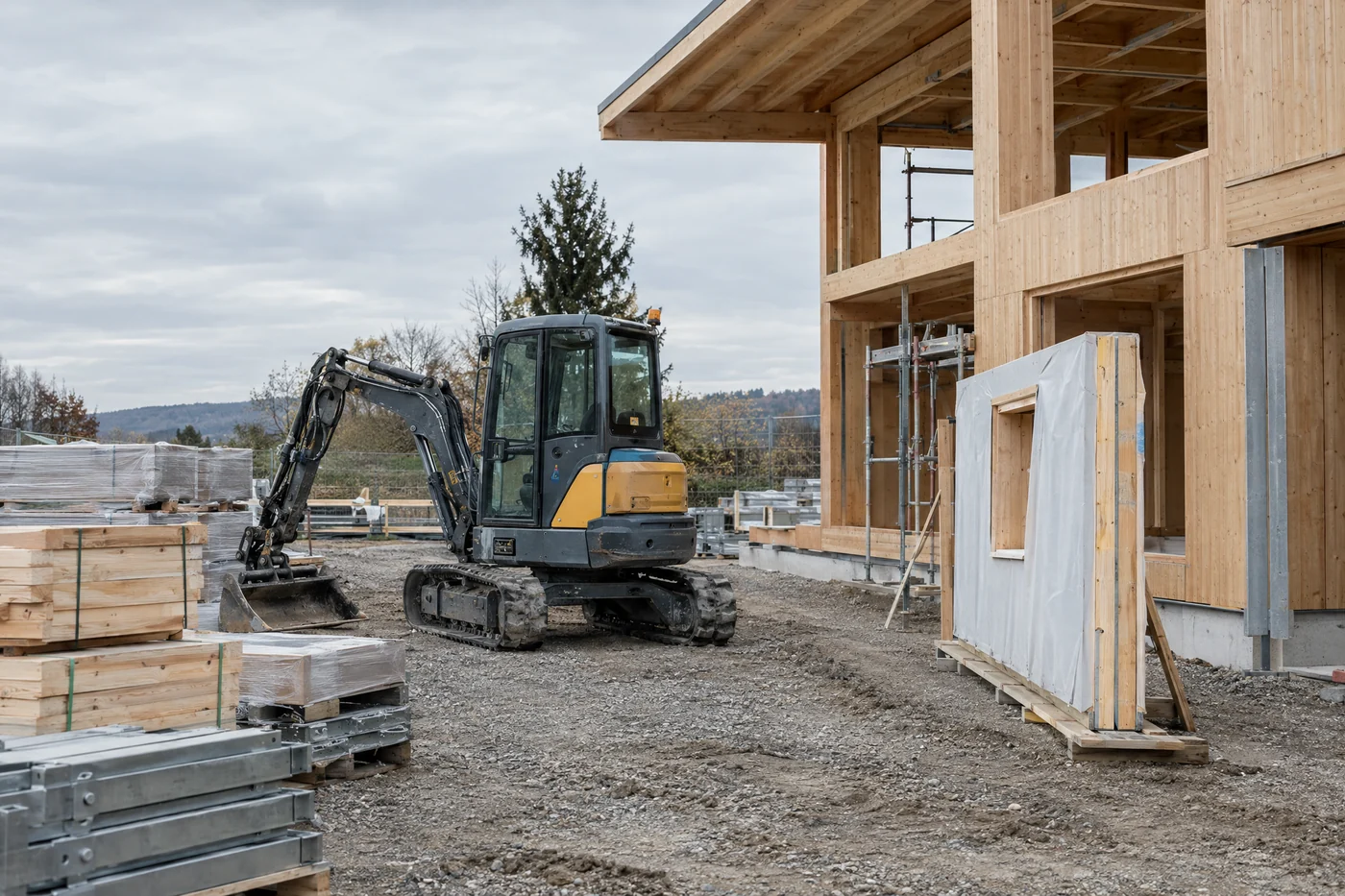
Sustainability trends in 2025 brought energy use, materials and the whole building life cycle into a shared focus. The following ten themes show where environmental considerations meet everyday design and construction decisions.
Here are the top 10 sustainability trends shaping the future of the construction industry:
1. Use of Electrical Machines
The growth of the electric construction machinery market may be 23.2% annually, and its value may reach 77.2 billion dollars by 2032 (CONEXPO-CON/AGG). These machines significantly reduce carbon dioxide emissions, noise and air pollution, thus making urban environments cleaner and more livable.
2. Autonomous and Robotic Technologies
The use of robots and autonomous machines increases efficiency, reduces the possibility of errors, improves occupational safety and minimizes waste production. Thanks to precision technologies, fewer resources are wasted, material loss is reduced, and the construction process becomes faster.
3. Green Building Materials
The use of recycled steel, cross-laminated timber (CLT), bamboo and other sustainable materials reduces the carbon footprint of buildings, improves their energy efficiency and supports biodiversity conservation. These materials are often lighter and easier to handle, reducing transport and installation costs (EY).
4. Digitization and Technological Integration
AI, IoT, and BIM technologies enable continuous measurement and improvement of sustainability performance, more accurate planning, more efficient construction processes, and significant reductions in construction time and costs. With these technologies, the use of energy and water can be optimized and waste can be reduced (OpenAsset).
5. Tightening of Regulatory Requirements
The reporting of climate risks and GHG emissions is mandatory in more and more regions, so sustainable practices will no longer be just possibilities, but also requirements. Tightening regulations encourage innovation and open new markets for sustainable products and services (EY).
6. Circular Architecture
Circular architecture aims to minimize waste, reuse materials, and recycle existing structures and buildings. In this way, the extraction of new raw materials, energy consumption and environmental impact can be reduced. Toldy Construct is committed to supporting this philosophy, promoting the sustainable management of resources.
7. Clean Energy Investments
Solar energy, wind energy, geothermal energy and other renewable energy sources are playing an increasingly important role in construction projects, which are more economical, environmentally friendly and sustainable in the long term. Integrating clean energy sources reduces building maintenance costs and energy dependence (Deloitte).
8. Climate-resistant Design
Designing buildings resistant to extreme weather conditions is becoming vital in order to adapt to the challenges of climate change. This includes the use of innovative materials and technologies that can withstand weather stress and result in longer-lasting buildings (UNEP).
9. Use of Alternative Fuels
The use of hydrogen, biofuels and other alternative energy sources in construction machinery is another significant opportunity to reduce carbon dioxide emissions, contributing to the improvement of air quality and reducing dependence on fossil energy sources (CONEXPO-CON/AGG).
10. Smart Building Sensors
AI-based intelligent sensors are able to optimize the energy efficiency of buildings, predict maintenance needs, reduce operating costs and environmental impacts. The use of smart systems increases the value and attractiveness of buildings for a sustainable future (JLL).
Summary
These sustainability trends not only shape the future, but also offer an opportunity for construction companies to take part in the construction of a more sustainable world in a responsible manner. Toldy Construct is proud to actively contribute to these innovations and to offer its customers reliable, sustainable and high-quality solutions.
🏗 Build smarter with Toldy Construct! Design and execution in one hand. At Toldy Construct, we combine 20 years of experience in the construction industry, architectural sensitivity and a value engineering approach to create high-performance, economically attractive and future-proof architectural solutions. We optimize the use of materials, construction processes and sustainability right from the creation of the concept without compromising on quality. 🔍 Our innovative approach guarantees demanding building structures, digital construction workflows and efficient project implementation. ⚙️ We combine architectural excellence with engineering precision and digital innovation to offer solutions that are durable, functional and represent long-term value. Whether it's planning or execution, we always prioritize efficiency, sustainability and the most modern technology - because we shape the future of the construction industry. Source:
UNEP Global Building and Construction Report 2024
EY Sustainability in the Construction Industry 2024
Deloitte 2025 Construction Outlook
JLL 2025 USA Construction Outlook
CONEXPO-CON/AGG Sustainable Machinery Trends 2025
OpenAsset Construction Industry Trends 2024
Sources
https://www.conexpoconagg.com/news/3-sustainable-construction-equipment-trends-for-2025
https://openasset.com/blog/construction-industry-trends/
https://www.unep.org/resources/report/global-status-report-buildings-and-construction
https://www.us.jll.com/en/trends-and-insights/research/construction