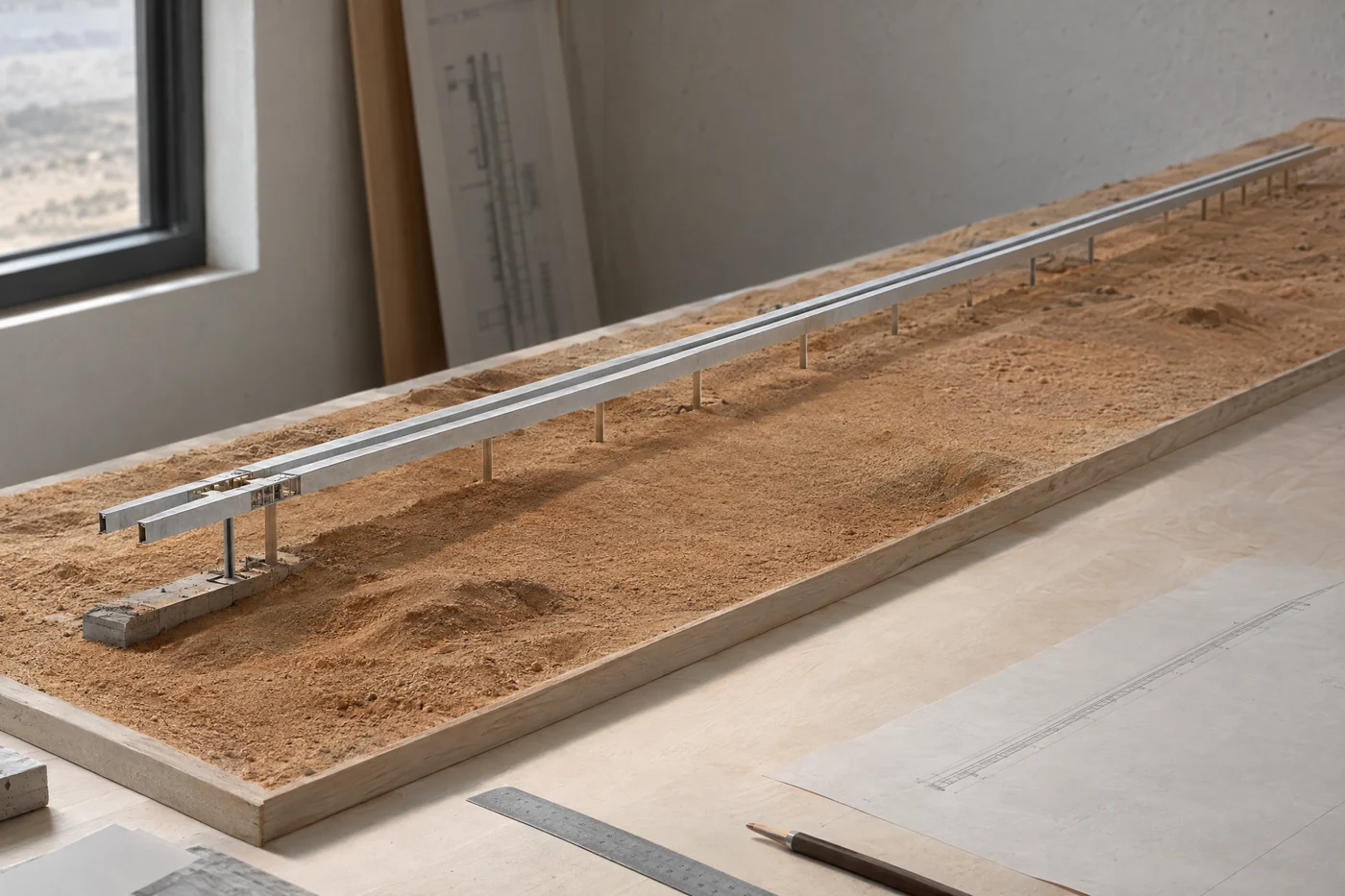
THE LINE attracted attention through its exceptional scale. From an engineering perspective, the more important questions are how it can be built, operated and supplied with resources. The long-term vision, the initial delivery phase and completed construction must be treated separately.
Scale and phasing
A development of this kind needs to be assessed through successive, verifiable phases. The size of an initial section does not, by itself, prove either delivery or permanent abandonment of the full vision. Plans and investment announcements should not be presented as completed buildings.
Ground conditions and structure
Foundations, movement joints and the behaviour of long, tall structures require detailed site data. Wind loading, pedestrian comfort and facade design are connected. Their assessment calls for calculations, CFD simulations and physical model testing where appropriate.
Transport and daily use
Key questions for a linear city include journey times, transfers, vertical transport and spare capacity. The theoretical speed of one vehicle is insufficient: the whole journey and peak demand need to be considered.
Water, energy and operations
Water supply, wastewater treatment, cooling and energy need coordinated systems. New technologies must demonstrate suitability under operating conditions. Promised renewable energy alone does not establish sustainability; resource demand across the full life cycle also matters.
Finance and feasibility
Funding, supplier capacity and demand shape delivery. Cost estimates must include long-term operation and uncertainty as well as construction. A megaproject’s financial viability cannot be inferred solely from the size of its backer.
Ecological connections
Large continuous developments and reflective surfaces can raise habitat and bird-protection concerns. Their extent needs site-specific assessment. The proportion of undeveloped land alone does not describe ecological connections or the full impact of development.
Lessons for Hungarian engineering businesses
Water treatment, structural and flow simulations, facade design and quality assurance can offer substantive professional tasks. Participation should follow an assessment of the actual work package, contractual responsibility and payment terms.
Conclusion
THE LINE makes important engineering questions visible. A city’s success ultimately depends on buildability, usability, verifiable environmental performance and sustainable operations rather than its renderings.