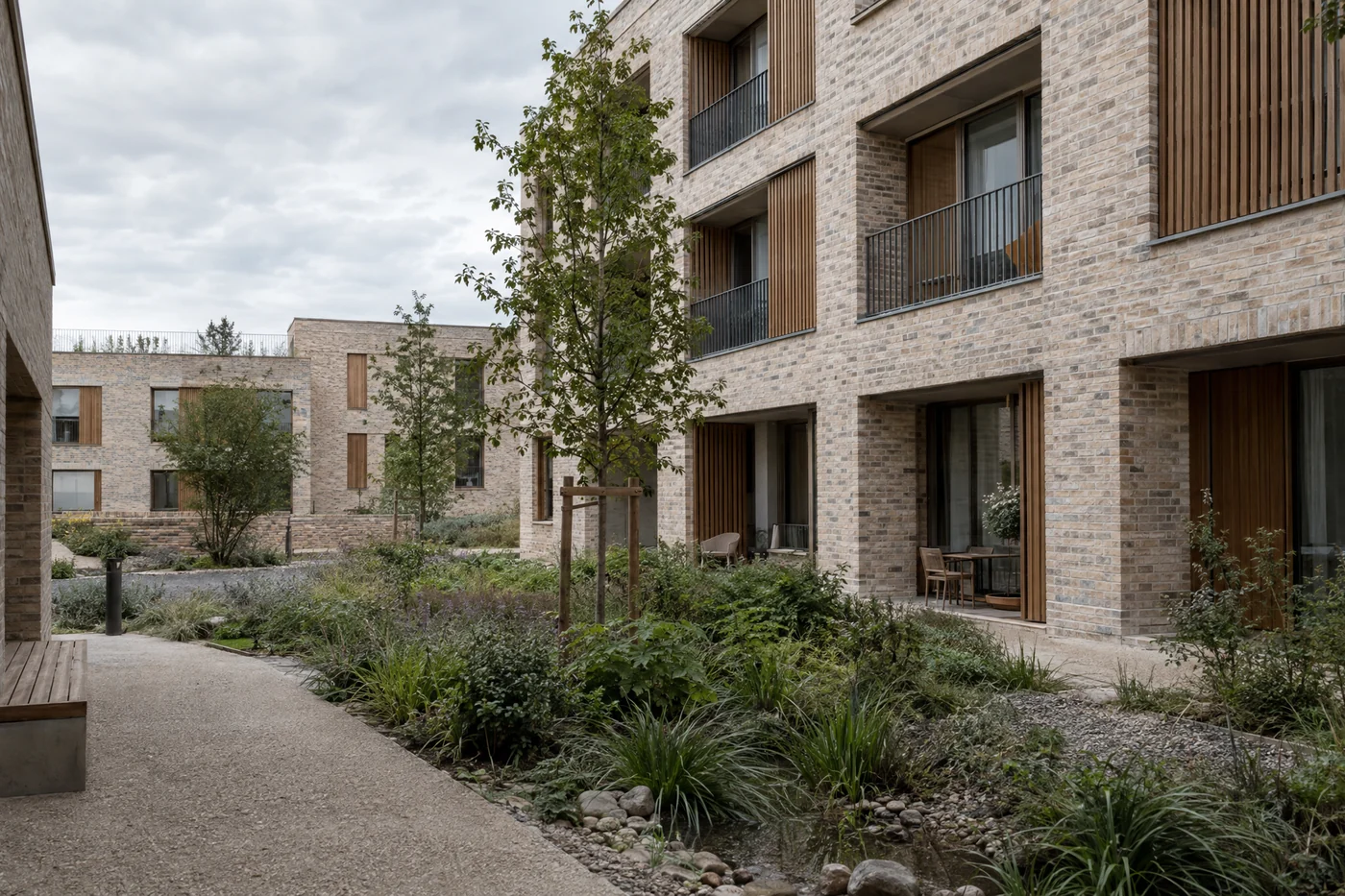
1. Introduction: Why is sustainable construction and renovation necessary?
The construction industry of the 21st century faces a global challenge that has not only technological but also economic and social aspects. The world's population is growing rapidly, urbanization is increasing, and the built environment is putting increasing pressure on natural resources. All this is exacerbated by climate change and the drastic increase in energy consumption. The question is not whether we need to make the construction industry more sustainable, but how quickly and efficiently we can do it.
While in the past architecture focused on aesthetic and functional aspects, today sustainability is also of paramount importance. Sustainable architecture aims to create buildings that minimize environmental impact while optimizing energy use and long-term economic sustainability.
2. Environmental effects of the construction industry: Emissions, waste production, resource use
The construction industry is one of the world's biggest polluting industries, generating the following main problems:
🔴 Carbon dioxide emissions
Building operations and construction account for a substantial share of global emissions. Any percentage needs a stated year and a clear distinction between energy-related and total emissions.
The cement industry alone accounts for 8% of all carbon dioxide emissions.
A project’s emissions depend on its size, materials, technology and assessment boundary. Use project quantities and verified factors as the starting point.
🔴 Waste production
The construction industry is responsible for 30-40% of the world's waste production.
Demolition of obsolete buildings results in huge amounts of rubble, concrete and steel waste.
In Hungary, 4-5 million tons of construction waste is generated every year, only a small part of which is recycled.
🔴 Resource usage
The construction industry is responsible for 25% of global fresh water use.
Natural resources such as sand and wood are often extracted in an unsustainable way.
Building operations require substantial energy. Energy demand and emissions are different metrics, linked by the energy sources and systems used.
These numbers clearly indicate that the construction industry in its current form is unsustainable and that radical changes are needed.
3. How has the construction industry transformed in recent decades?
Sustainability in the construction industry is not a new idea, but the real breakthrough began in the last two decades. The development was shaped by the following factors:
🟢 Regulatory changes and international guidelines
Since 2010, the European Union has been introducing increasingly strict environmental protection regulations that tighten building standards and energy efficiency requirements. Examples:
The goal of the EU Green Agreement is for the construction industry to become climate neutral by 2050.
"Nearly zero energy" buildings, which will be mandatory from 2021, have brought significant progress.
European building-energy requirements are becoming more demanding, but obligations and timelines vary by country, building type and project. Check the rules applicable to the specific development rather than assuming a universal 2025 net-zero requirement for all new buildings.
🟢 New technologies and innovations
3D printed houses - faster construction, less waste, smaller ecological footprint.
Self-healing concrete - contains special bacteria that are activated in case of cracks, thus reducing maintenance costs and material consumption.
Sustainable insulation materials - such as recycled cotton, hemp or wood pulp insulation.
🟢 Smart buildings and digitization
Intelligent building management systems enable optimization of energy efficiency.
With the help of artificial intelligence (AI), predictive maintenance can be implemented, reducing material waste.
IoT-based sensors measure energy use, water consumption and temperature conditions and optimize them in real time.
🟢 Exemplary sustainable construction projects
Bosco Verticale (Milan, Italy) - Two high-rise buildings containing nearly 900 trees and 5,000 shrubs, reducing the urban heat island effect and improving air quality.
The Edge, Amsterdam: a frequently cited example of efficient office design and smart building operations. Specific performance claims need to be interpreted alongside their measurement boundaries.
4. Summary: The future of the construction industry
Sustainable architecture cannot be an option, but must be a basic requirement for all new investments and renovations. Due to innovative technologies, regulatory changes and the growing demand for energy efficiency, we can expect drastic changes in the coming years. The question is how quickly the players in the industry are able to adapt to the requirements of a sustainable future.
🏗 Build smarter with Toldy Construct! Design and execution in one hand.
At Toldy Construct, we combine 20 years of experience in the construction industry, architectural sensitivity and a value engineering approach to create high-performance, economically attractive and future-proof architectural solutions. We optimize the use of materials, construction processes and sustainability right from the creation of the concept without compromising on quality.
🔍 Our innovative approach guarantees demanding building structures, digital construction workflows and efficient project implementation.
⚙️ We combine architectural excellence with engineering precision and digital innovation to offer solutions that are durable, functional and represent long-term value. Whether it's planning or execution, we always prioritize efficiency, sustainability and the most modern technology - because we shape the future of the construction industry. 👉 If sustainable architecture is not at the center, the construction industry will cut the tree under itself.
💡 What do you think? Which technology can make the biggest difference? Write your opinion!
Sources
UNEP (2022): Global Status Report for Buildings and Construction.
IPCC (2021): Sixth Assessment Report.
OECD (2021): Building and Waste Management Report.
MÉASZ (2023): Annual report of the Hungarian Building Materials and Construction Products Association.
European Green Deal (2021): EU Climate Neutrality Goals.
UK Green Building Council (2023): Net Zero Construction Strategy.
MIT (2022): Self-healing Concrete Innovations.