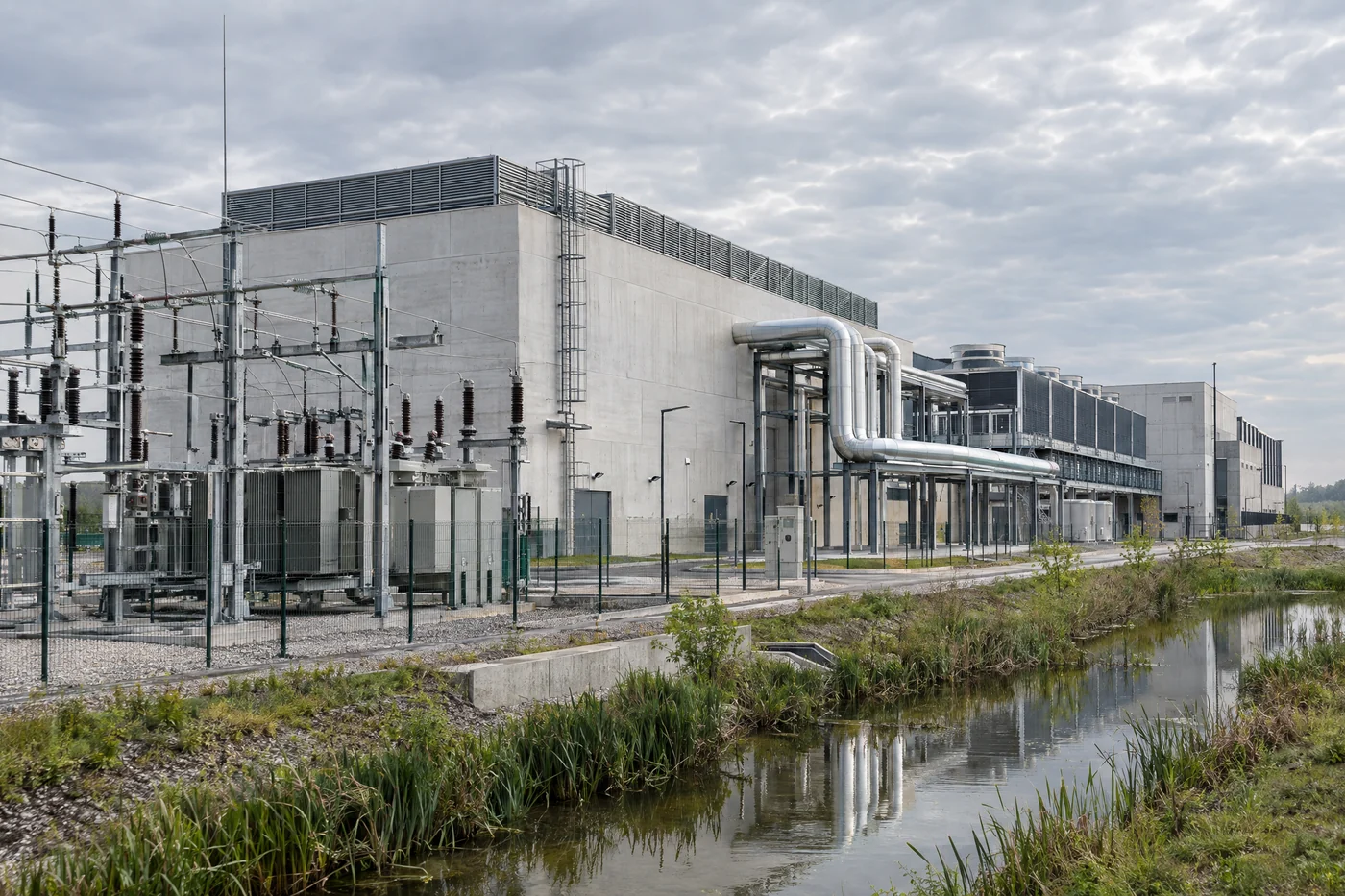
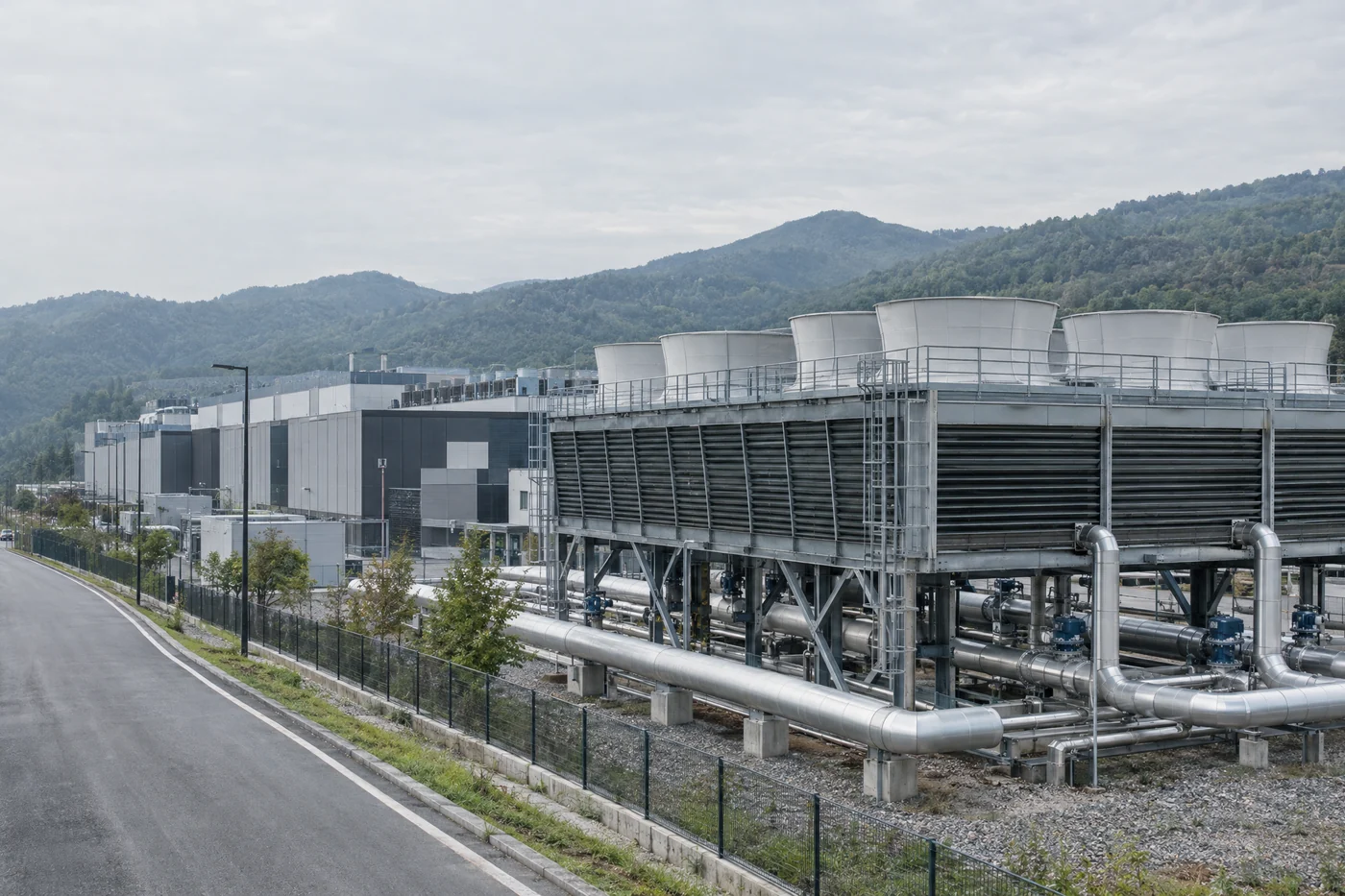
Digital services and AI are increasing demand for data centre capacity in South Korea and worldwide. Power supply, cooling and resource efficiency therefore need coordinated assessment. This article focuses on those design questions and international examples.
The increasing energy demand of server centers
The exponential growth of artificial intelligence-based applications and data processing has drastically increased the energy consumption of data centers worldwide. According to the International Energy Agency (IEA), the global data center industry currently consumes nearly 1% of the world's total energy consumption, and this proportion may even double in the next decade. AI-based systems such as ChatGPT or models based on deep learning significantly increase this load.
Power density and availability requirements strongly influence cooling choices in AI data centres. Conventional and liquid-cooling approaches should be compared using actual loads, climate and whole-system energy demand.
Sustainable cooling solutions from history
Traditional windcatchers are valuable examples of using air movement in architecture. Their principles can inform design, but they cannot alone meet the cooling and availability requirements of a high-density data centre.
Used in the Middle East and North Africa for thousands of years, "badgir" windbreaks are architectural structures that use natural air currents to provide cooling. Data centers in South Korea could adapt this method, which would significantly reduce the need for mechanical cooling.
Source: https://kp.hu/epiteszeti-inspiracio-mik-azok-a-hagyomanyos-selfogok/
2. Underground cooling systems (Qanats and geothermal pipes)
The ancient Persian qanat systems ensured the natural cooling of buildings with the help of underground water movement. The use of ground heat exchange systems can also be viable in South Korea, as the low temperature of deep underground channels can significantly reduce the cooling energy demand of data centers.
Source: https://www.worldhistory.org/qanat/
3. Materials with high heat capacity and "cool roof" systems
Exploitation of thermal mass allows the temperature of the building to remain uniform throughout the day. The use of thick stone and concrete walls or phase change materials can result in significant energy savings.
Source: https://roofgnome.com/blog/roofing/what-is-a-cool-roof/
4. Solar chimney and thermal energy utilization
Solar chimneys increase air exchange in buildings with the help of air movement caused by heat. In the case of data centers in South Korea, the waste heat produced by the servers could be used to naturally accelerate air movement.
Source: https://www.istudioarchitects.com/news/2023/4/17/solar-chimneys-are-a-first-for-dc-public-schools
Data centres and examples of passive architecture
1. EcoDataCenter (Sweden)
It is one of the greenest data centers in the world, which operates with 100% renewable energy. The heat of the servers was integrated into a district heating system, thus reducing energy consumption.
Source: https://www.ecodatacenter.se/en/
Eastgate Centre: a commercial and office building using passive principles, not a data centre
Built on the basis of the natural ventilation system of termite castles, it uses 90% less energy than air conditioners.
Source: https://neverenougharchitecture.com/project/the-eastgate-centre/
3. Lefdal Mine Data Center (Norway)
Lefdal’s former-mine location illustrates why site conditions and cooling infrastructure need to be assessed together. Underground siting alone does not provide all the cooling that servers require.
Source: https://www.lefdalmine.com/
What direction is South Korea heading in?
There is currently little concrete information available on the South Korean project's sustainability strategy. However, if the country wants to maintain its leading role in technological innovation, it is essential to incorporate green solutions.
Possible questions that project managers need to answer are:
Is there an alternative cooling strategy that reduces air conditioning energy?
To what extent are the possibilities of thermal mass and ground heat exchange used?
Do they integrate solar chimneys or other passive ventilation solutions?
Conclusions
The data center being built in South Korea provides an opportunity to create an energy-efficient structure by combining modern and traditional sustainable architectural solutions. However, if investors ignore these opportunities, the new data center will be nothing more than another power-guzzling monster in the digital world.
Data centre environmental performance depends on energy and water use, the electricity source and the construction life cycle. Sustainability claims therefore need measurable data and clear assessment boundaries.
Build smarter with Toldy Construct! Design and execution in one hand. At Toldy Construct, we combine 20 years of experience in the construction industry, architectural sensitivity and a value engineering approach to create high-performance, economically attractive and future-proof architectural solutions. We optimize the use of materials, construction processes and sustainability right from the creation of the concept without compromising on quality. 🔍 Our innovative approach guarantees demanding building structures, digital construction workflows and efficient project implementation. ⚙️ We combine architectural excellence with engineering precision and digital innovation to offer solutions that are durable, functional and represent long-term value. Whether it's planning or execution, we always prioritize efficiency, sustainability and the most modern technology - because we shape the future of the construction industry.
Sources
https://kp.hu/epiteszeti-inspiracio-mik-azok-a-hagyomanyos-szelfogok/
https://www.worldhistory.org/qanat/
https://roofgnome.com/blog/roofing/what-is-a-cool-roof/
https://www.istudioarchitects.com/news/2023/4/17/solar-chimneys-are-a-first-for-dc-public-schools
https://www.ecodatacenter.se/en/
https://neverenougharchitecture.com/project/the-eastgate-centre/