"One construction job indirectly generates two more jobs." - Dr. Gábor Toldy - Architect, Data Scientist, Economist-Lawyer
1. The robot revolution has arrived - but why now?
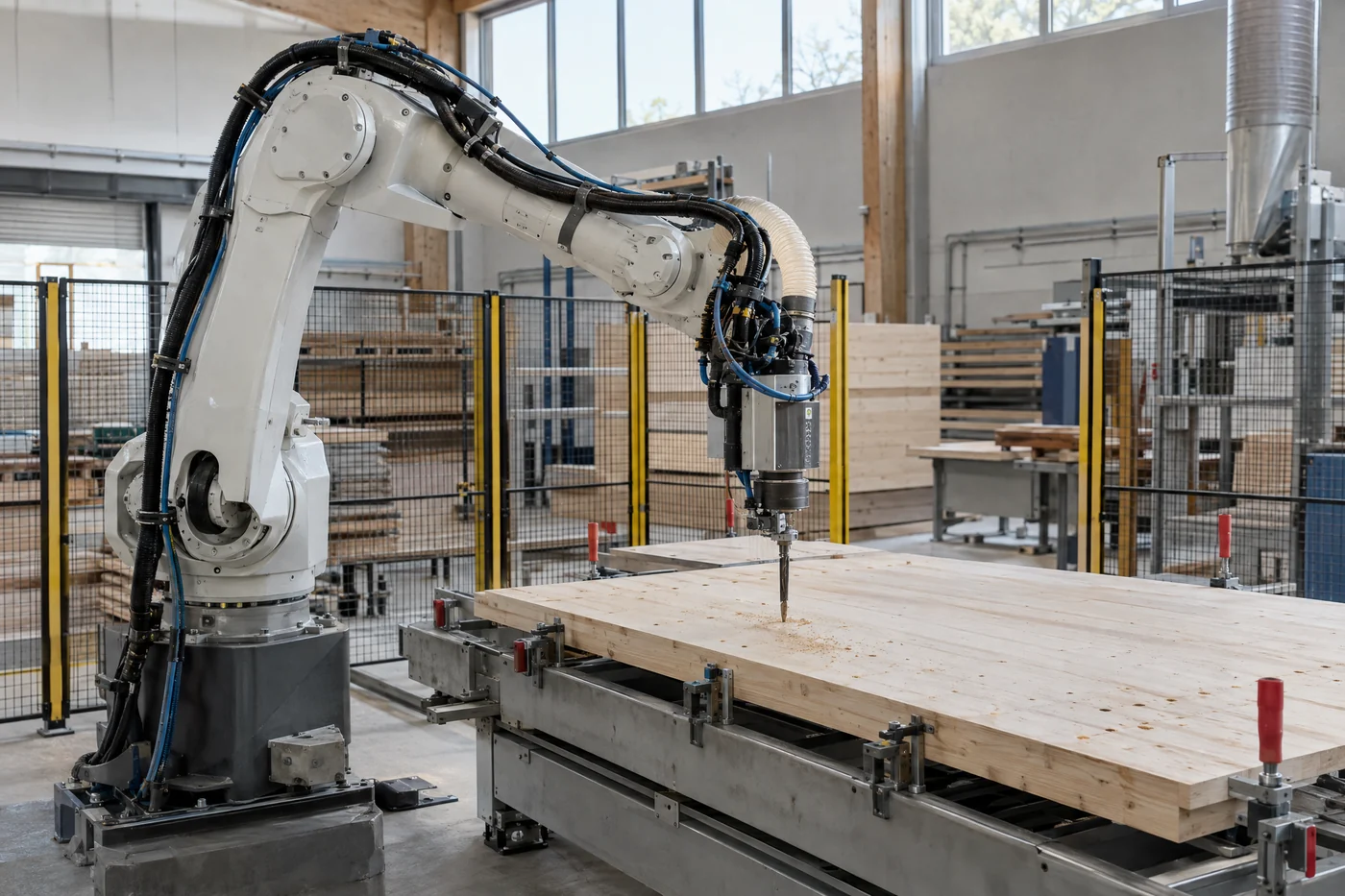
Construction robotics is driven by labour shortages, safety needs and opportunities to automate repetitive work. Market forecasts use different methods and cannot replace a business case for a specific application.
2. Toolkit in 2025: from robotic claws to lidar-controlled dozers
Brick wall in four hours? The hadrian X robot pulled up the walls of two family houses in Florida during ONE shift, with three operators - the goal is 10 houses in the Inspen demonstration program.
Drywall 60% faster. With the Canvas 1200CX robot, the five- to seven-day smoothing-sanding cycle was shortened to two days, 99% of the dust was extracted - plasterboarding Canvas has turned from an ergonomic nightmare into a data-driven process.
Adoption of autonomous machines and robots varies substantially by task and company. Implementation needs to account for changing site conditions, human–machine interaction and site safety.
3. Academic perspective: ETH Zurich and the "digital in-situ" paradigm
According to the 2023-25 publications of the ETH Gramazio-Kohler research group, on-site robotic 3D printing and land-based additive manufacturing are no longer a laboratory curiosity, but a system-level prototype: adaptive robotic compaction and 4D formwork technology make the concreting of complex forms repeatable even in industrial conditions gramaziokohler.arch.ethz.ch. The bottom line: the robot not only executes, but also learns from real-time sensor data, so the design and construction cycle increasingly overlap.
4. Data, AI, predictive maintenance
Sensor fusion + machine learning = zero downtime? Latest Sensory Robotic Arm Experiments Track Joint Vibration Spectrum in Real Time and Estimate Remaining Lifetime - Error Prevention Hours, Not Days in Advance MDPI. Translated into business language: an extra working day's downtime of an expensive machine can take up to 1-2% of the project margin; this risk can be planned with predictive operation.
5. Productivity paradox
We know since McKinsey's 2024 analysis: between 2000 and 2022, the productivity of the global construction industry increased by only 10%, while the manufacturing industry increased by 90%. Between 2020 and 2022, McKinsey & Company also measured an 8% drop. If robotics does not accelerate, the industry will be unable to meet the 70% higher demand of 22 trillion dollars in 2040.
Key question: does the amount of data produced by the machines really give a boost to the sluggish productivity curve, or is the new chapter of the "pilot-inferno" just beginning?
6. Job loss versus quality employment
According to OECD forecasts, generative AI and robotics will primarily replace dangerous, repetitive tasks in the construction industry, while the demand for complex manual, supervisory and data-oriented work will increase, OECD. However, in the domestic market, the dramatic lack of supply of skilled workers and under-training represent both a danger and an opportunity: if we do not act now, the "two-speed Europe" will become concrete on the robot front as well.
7. There is no robot without regulation and transparency
Dr. Gábor Toldy - In his doctoral, legal and economic works, he repeatedly points out that the "black and white" operation of the Hungarian construction industry is maintained by the incomplete contract culture, opaque procurement and the weak advocacy power of the chambers. Robotics is a double-edged sword here:
Capital intensive. Due to its investment needs, it only pays off in a regulated, predictable market environment.
Data intensive. The ownership and cyber security of the data collected by the sensors is currently a gray area.
If public procurement and construction laws do not quickly address the machine-data-human trilemma, technology will either leak out or fall into oligopoly hands - neither of which encourages innovation.
9. What can a Hungarian decision-maker or general contractor do?
Pilot, but not a sandbox: three projects - three different use-cases (prefab, on-site, data monitoring), with measured KPIs.
RegTech sandbox: NGM-ÉMI joint framework for handling robot data; like the fintech sandbox, only with the smell of concrete.
Chamber credit system: robot operator reskilling should be mandatory further training with a subsidized exam.
Encouraging open data standards: robot telemetry integrated with BIM so that small businesses can also join the chain.
10. The future: cooperative ecosystem
Industrial robots are no longer "futuristic show elements", but data-based production tools. Those who act now gain productivity and security; those who delay risk margin reduction and project delay. But - and Toldy's glasses are the point here - there will only be a sustainable breakthrough if the technological hype is accompanied by regulatory and industry transparency.
Bottom line: the robot revolution alone will not change the construction industry, but it is an excellent litmus test: it shows how much we are able to think in a system. If it succeeds, it will not only be drones and 3D-printed walls, but also a competitive, transparent construction industry - at home as well.
Sources
https://highways.today/2024/08/26/construction-robots-2024/
https://inspenet.com/en/noticias/hadrian-x-accelerates-robotic-construction-in-the-us/
https://canvas.build/canvas-featured-in-walls-ceilings-leading-the-charge-in-drywall-robotics/
http://globalgrowthinsights.com
http://gramaziokohler.arch.ethz.ch