The concept of embodied carbon is no longer unknown in international literature. In more and more countries and companies, it is a basic requirement that the carbon footprint of buildings is calculated not only for operation, but for the entire life cycle. And here comes the key question: what can we, architects, engineers, investors, do to actually reduce emissions?
The good news: the solutions do not lie in futuristic technologies, but are already available today. The bad news: without a strategic change of approach, these tools will not be integrated into Hungarian practice en masse.
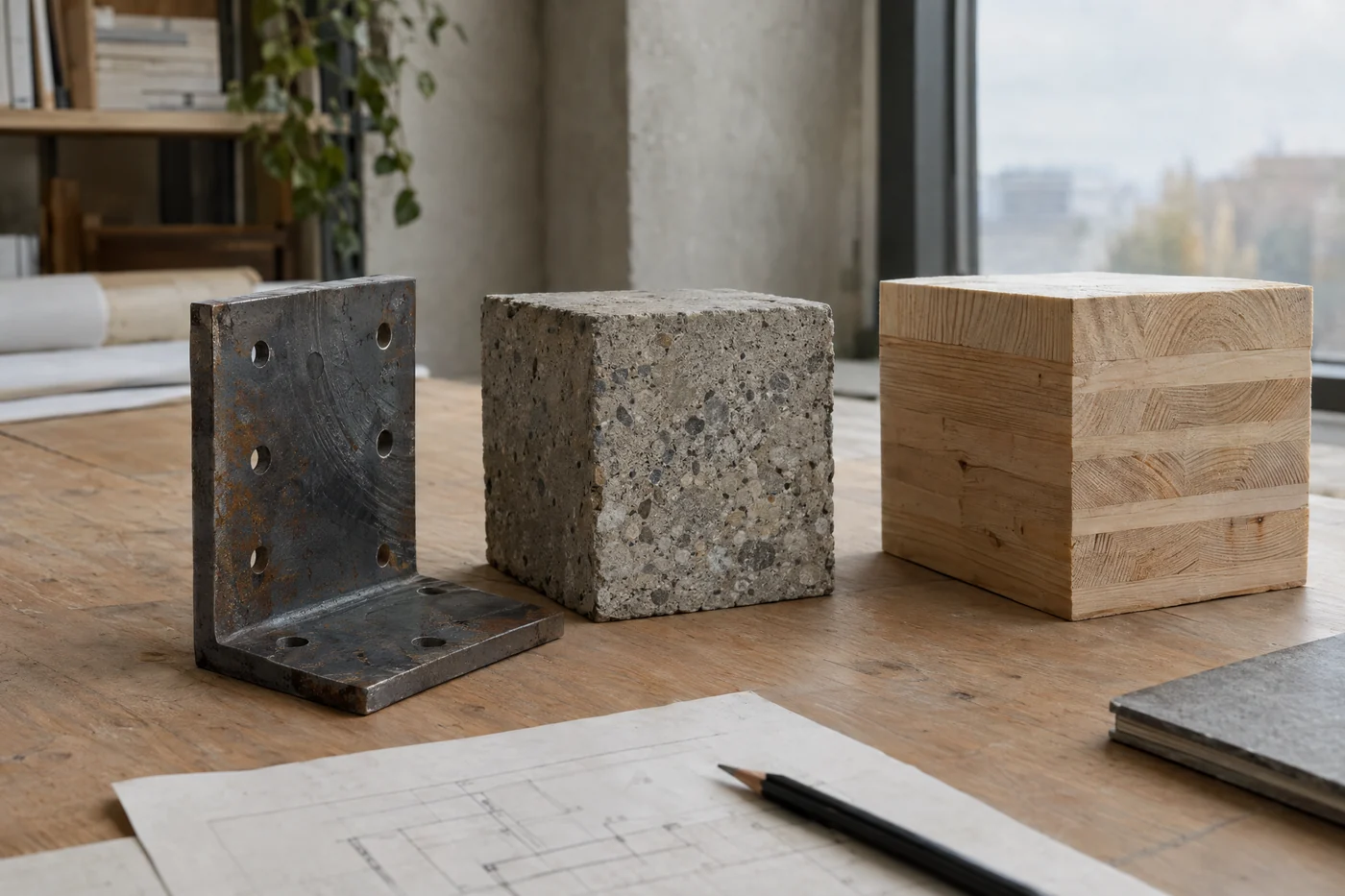
1. Material selection - handling the biggest CO₂ source
Material production accounts for a substantial part of embodied carbon in many projects. Identify the largest contributors using quantities and product-specific data, then focus reduction efforts on them.
Recycled steel and concrete: The production of recycled steel requires up to 60-70% less CO₂ than production from raw ore. Crushed, recycled concrete can replace gravel and crushed stone as an aggregate in road construction and other projects.
Wood and other renewable materials: The use of wood as a building material not only reduces CO₂ emissions, but also stores carbon dioxide during the entire life cycle of the building. In Scandinavia, entire residential areas are now built from CLT (cross laminated timber).
Low carbon intensity cement (e.g. LC3): LC3 (limestone calcined clay cement) is already commercially available in France and Switzerland, which has 30-40% lower emissions compared to traditional Portland cement.
2. Design approach - less is often more
In addition to the choice of materials, how the building is designed is at least as important.
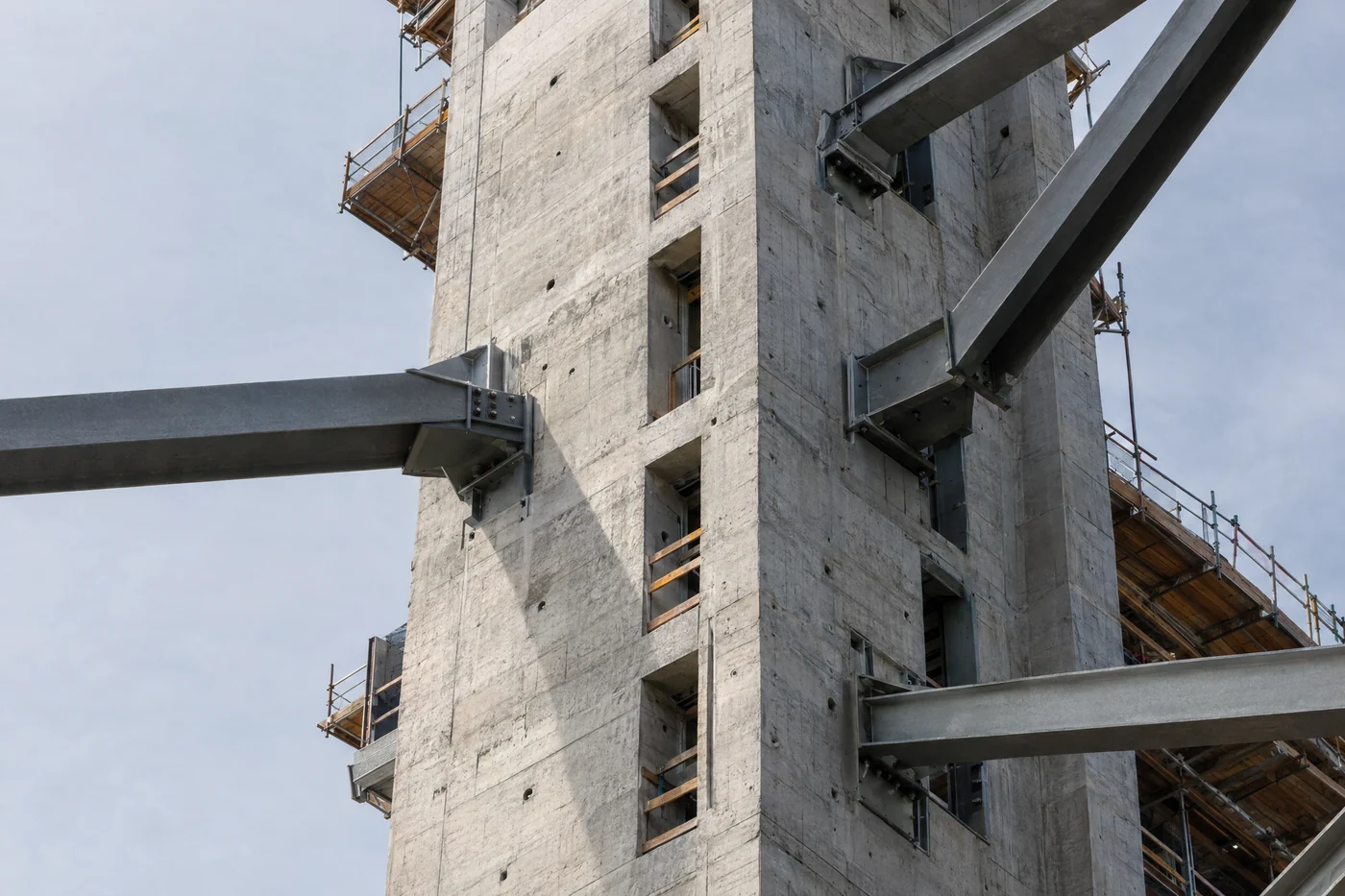
Structural optimisation: reduce material demand through accurate design and an appropriate structural system while retaining all required safety levels and safety factors.
Modular and demountable structures: During the lifetime of a building, its function often changes. If the structural elements can be dismantled and re-installed, the demolition of the building does not create waste, but a resource that can be recycled. This is the basic principle of the circular economy in the construction industry.
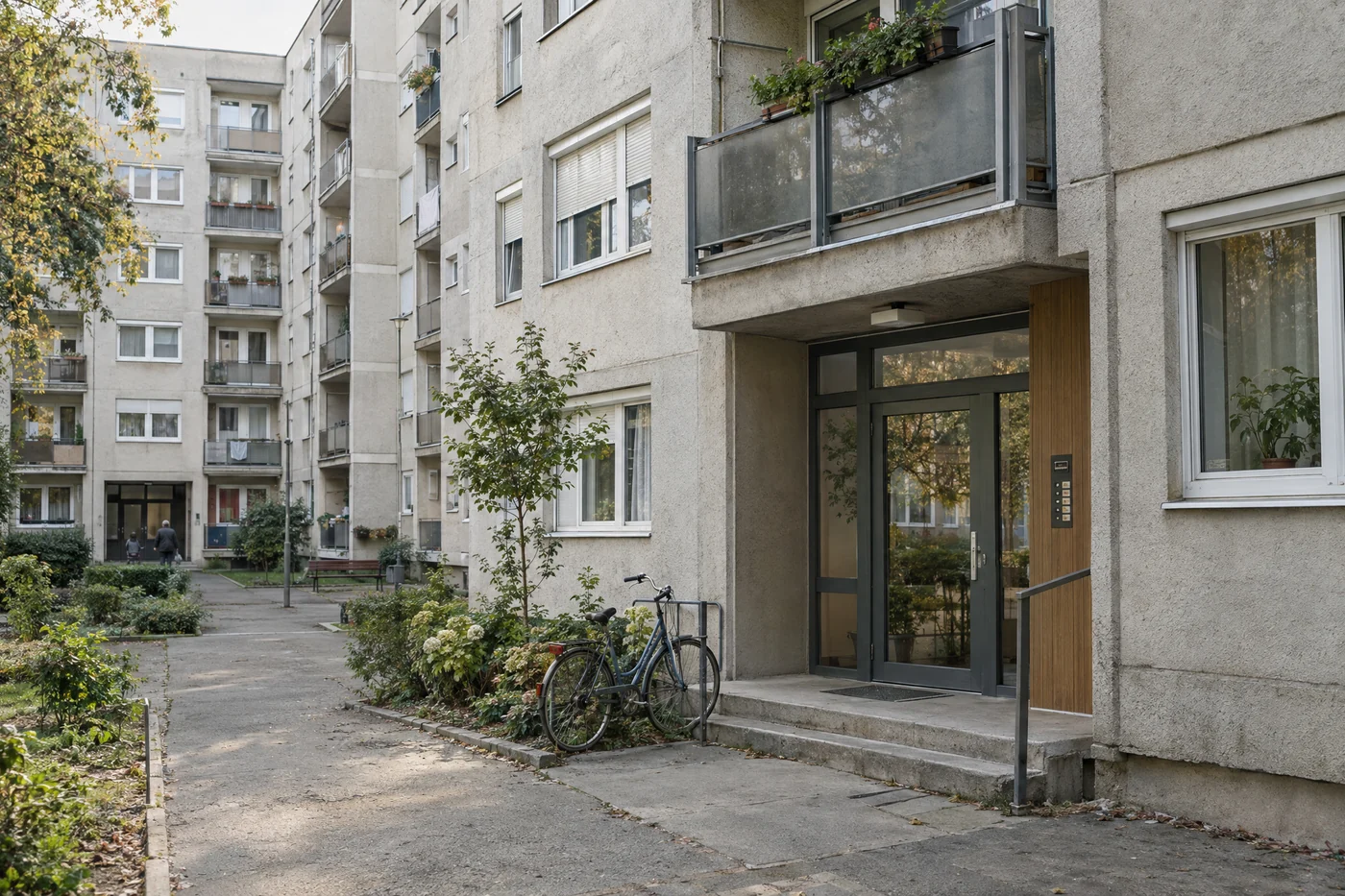
Life extension: A new house may not be necessary. The renovation and conversion of existing buildings often has a smaller carbon footprint than a completely new investment. This option appears too rarely on the Hungarian market.
3. Local procurement - short supply chain, lower emissions
Transport emissions are estimated from the mass transported, distance travelled and a verified emission factor for the transport mode. Factors expressed per vehicle-kilometre and per tonne-kilometre are not interchangeable.
In Western Europe, several public procurements now stipulate the maximum delivery distance. This not only reduces the carbon footprint, but also strengthens the local economy.
International examples
France: RE2020 applies life-cycle environmental assessment to covered new buildings. Requirements depend on building type and timing and need to be checked accordingly.
International direction: whole-life carbon assessment is gaining importance. Implementation schedules and coverage differ by country; one date should not be generalised to every new building.
The Netherlands: MPG assesses environmental performance in covered building categories. It includes multiple environmental impacts and is not simply a carbon-only calculation.
Hungary - before a turning point
Whole-life thinking helps teams prepare for changing client and regulatory expectations. Operating costs, durability and future risks deserve consideration alongside the initial purchase price.
The real question is not whether it is worth it to reduce CO2, but who will be the first to respond in time and who will be left behind when the market realigns.
Conclusion
Reducing embodied carbon is not a luxury or a marketing ploy, but a business and strategic imperative. The choice of materials, conscious planning and local procurement are all tools that can be used to significantly reduce the carbon footprint. International examples show that those who change in time not only do it for the environment, but also gain a competitive advantage.
The decision is therefore not only a question of professional, but also of economic survival.