Condominium energy renovation combines technical, financial and collective decisions. Alongside European policy directions and practical examples, this article examines five common pitfalls and possible solutions.
If you have a family house, energy renovation is "only" a technical project. If you live in an apartment building, this is a technical + financial + legal + community decision project. And this is where he tends to bleed.
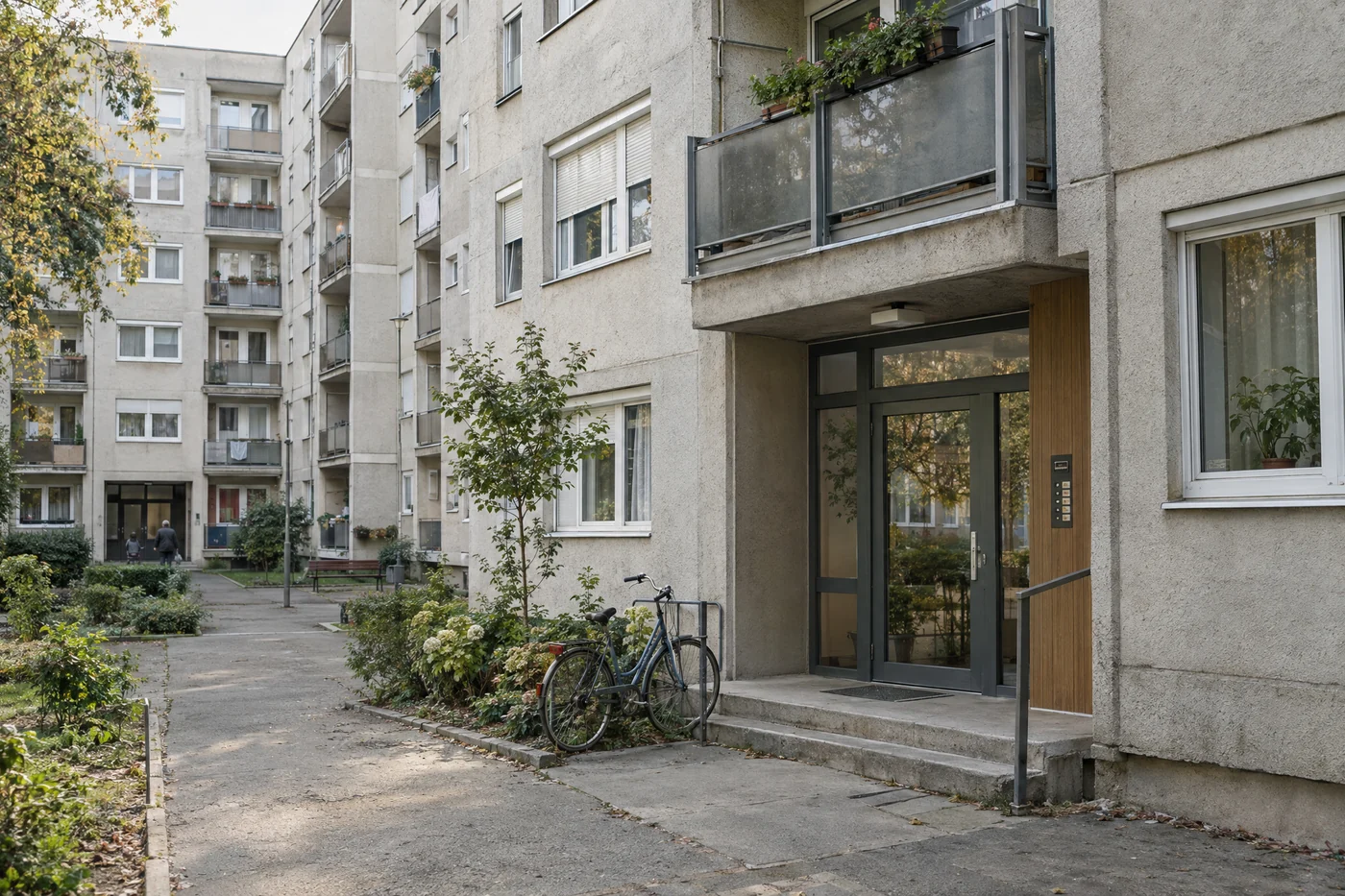
In Europe, it is no coincidence that they focus separately on the apartment/condominium stock: nearly half of the EU's population lives in apartments, and the urban lifestyle dominates. Energy Saving Trust The stakes are huge: buildings are the biggest energy consumers, but the renovation rate is low.
In this article I will give you two things:
European direction (policy): where does the regulation push condominium renovations.
Practical examples: approaches from five countries, five common pitfalls and considerations for preparing decisions.
1) European policy in brief: why is the renovation of apartment buildings accelerating?
The renewal direction of the EU is now not just a "recommendation", but a concrete path:
The EPBD (Energy Performance of Buildings Directive) entered into force in 2024 and must be transposed into national law by 2026.
The EPBD sets a trajectory for average primary energy use across national residential building stocks: at least 16% lower by 2030 and 20–22% by 2035 compared with 2020. These are stock-level targets, not identical savings requirements imposed directly on every condominium.
"Path planning" tools are coming: building renovation passports and stronger EPCs (energy certificates).
Financing incentives are also being cleaned up: from January 1, 2025, member states must stop subsidizing new stand-alone fossil boilers.
And what's worth its weight in gold for apartment buildings: the role of one-stop shops (technical assistance, "one-stop" support) is getting stronger.
In Hungarian: the system is moving in the direction that the condominium does not struggle alone, but receives a roadmap, technical support, and predictable financing.
2) Best practice from Europe: 5 countries, 5 lessons for apartment buildings (Energy Saving Trust)
The Energy Saving Trust's multi-apartment focused analysis looks at the programs of five countries (NL, FR, ES, EE, LV) and it is very clear: the question is not whether there is support, but whether there is an organizational "engine" alongside the support.
The Netherlands: building the decision-making and financing "corridor".
The Dutch model is interesting because it states the essence: a decision in an apartment building requires a document and a plan first.
VvEs (apartment housing communities) receive support for inspections/plans (e.g. long-term maintenance plan), and there is a combination of support + loan logic for renovation.
The limitations of the "co-housing loan" are also managed during the financing (e.g. limit per apartment, interest rate, reducing the risks of the co-housing loan).
Lesson: first build a decision infrastructure (audit, plan, schedule), then build a wall.
France: AMO (mandatory renovation project management) + certified contractors
The key to French condominium support is:
The AMO (assistance à maîtrise d'ouvrage) is mandatory - in Hungarian: renovation "master", who will see the project through.
The conditions of the support are tied to quality (e.g. certificates, authorizations) and are based on specific building diagnostics.
Lesson learned: project management in an apartment building is not a "good idea", but rather risk management.
Spain: targeted mass program + framework for 2022-2026
In Spain, the recovery plan (PRTR) has mass housing renovation targets with a time window (2022-2026) and supports interventions at several levels.
Lesson learned: the biggest enemy in condominiums is "someday". You need a time frame.
Estonia: "deep renovation" industrialized
Estonia is very open about the numbers: deep renovation target until 2050, typical cost range in €/m², and also what this might mean for an average apartment.
Lesson learned: if there is no normal cost and technical benchmark, the discussion at the general meeting will disappear.
Latvia: if the program doesn't run fast enough, the market won't either
The example of Latvia is a good "negative best practice": despite the construction (loan + support), if the renovation rate remains low, the momentum will not stop.
Lesson learned: you need a stable, repeatable process - otherwise every project will be "first" and remain expensive.
3) The 5 typical apartment building traps (and solutions)
Multi-owner buildings have the same walls all over Europe: split incentives (winners don't pay the same), complicated decision-making, legal "gray zones". In our case, this is added to the fact that some of the condominium decisions are "expenses beyond normal management", which can even lead to an expectation of unanimity - this is a project risk in itself.
Quick overview: trap → solution pattern
Now let's take a look at the most important ones so that they also pass the general meeting.
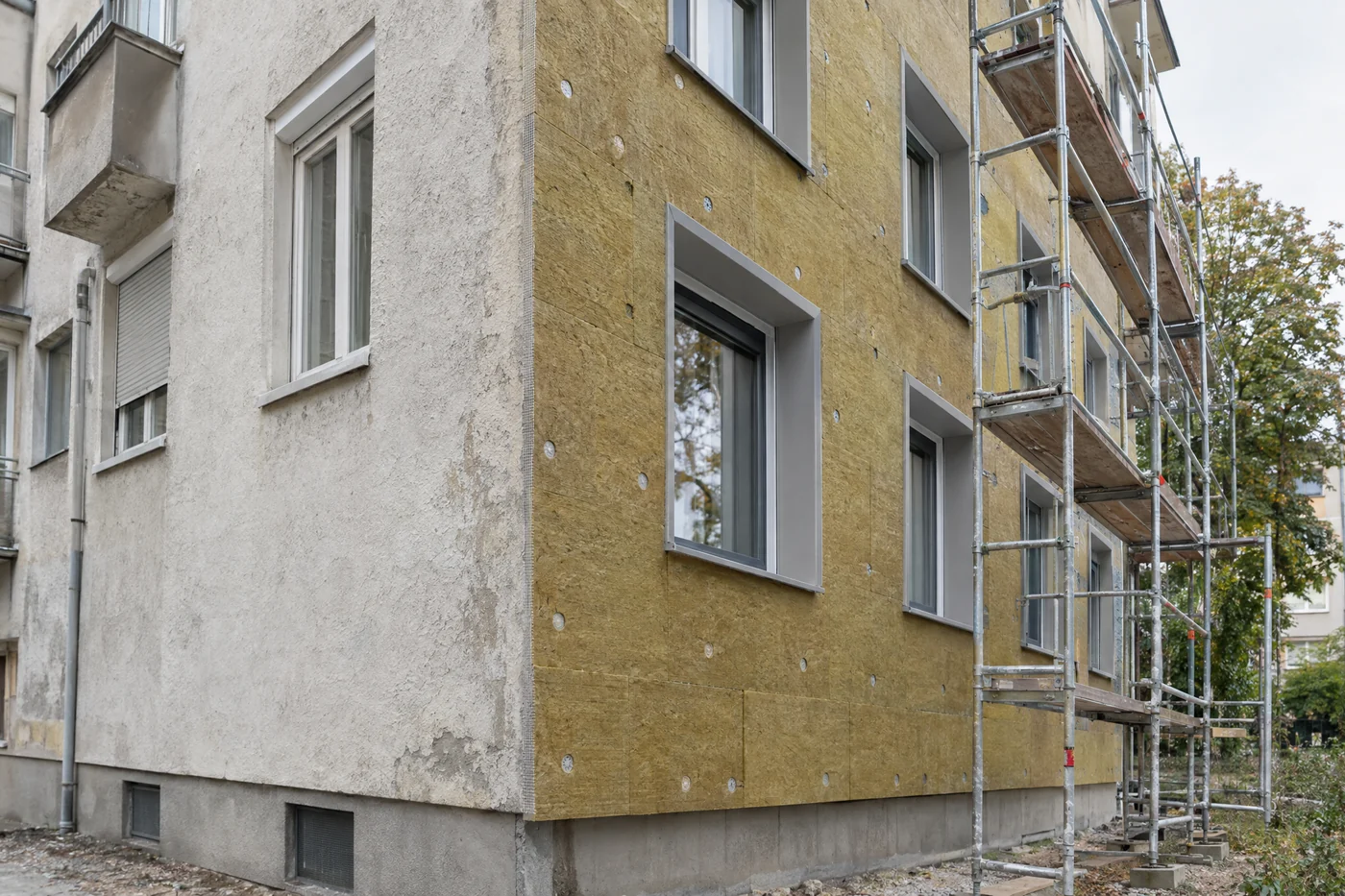
Trap #1: The "half-renovation" (only facade, mechanical engineering later)
Why does it fail? Because the system works together: if you close the envelope, the humidity, the hydraulics of the heating system, and the comfort change.
Sample solution:
Energy audit at building level + scheduled renovation passport (step-by-step roadmap).
The Dutch therefore finance the plan and the preparation of the decision: "decision preparation" is not administration, but a profitable investment.
Trap #2: Window replacement without ventilation → mold, conflict
What's going on? Air sealing improves, air exchange worsens. And the resident feels: "we renovated, but there is still a problem."
Sample solution:
Ventilation concept (even staggered: controlled slot ventilation → central solution).
Resident user guide + measurement (vapor, CO₂).
Within EPBD, there is also a special emphasis on internal environmental quality.
Trap #3: Decision Paralysis (“there is no majority”)
Europe describes this as "split incentive + governance": many owners, different interests, complicated decisions. In Hungarian law, the powers of the general assembly and the rules for major expenses deserve a separate chapter - this cannot be taken lightly.
Sample solution (exercise):
Assembly decision package = 1) audit, 2) 2-3 technical scenarios, 3) cost/housing, 4) financing options, 5) schedule, 6) risks.
This is exactly what the French AMO logic is about: someone takes the project and "translates" it into an understandable decision.
Trap #4: Contract = “price and term”, the rest is a blur
In condominium renovation, the most expensive word is additional work. The second most expensive: misunderstanding.
Sample solution:
Transparent contract structure: what is included, what is not included, under what quality conditions, how the price can change. This is also a basic principle on the consumer side: obligations must be assessable.
In construction, "law and process" are not paperwork, but market trust.
Trap #5: "There's no one to walk you through"
This is the most common silent killer of condominium renovations: everyone knows something, so no one is responsible for it all.
Sample solution:
One-stop shop / AMO / independent project manager: technical assistance + decision support + implementation control.
The Energy Saving Trust specifically emphasizes: expert support is needed at decision points and a long-term stable program is needed.
4) "7 steps" (copy-paste process) of a working condominium renovation
Building diagnosis (energy + structure + mechanical engineering + fire protection involvement)
Renewal passport / roadmap (3 scenarios: basic / medium / deep)
Assembly decision package (of course, with numbers per apartment)
Closing of financing (subsidy + loan + schedule) - Dutch logic: first frame, then work
Design + permits + tender (not a "price competition", but a technical content competition)
Execution (resident-friendly scheduling, communication, quality control)
Handover + adjustment + 12-month measurement (otherwise the savings will “slip away”)
5) Why is the energetic renovation of condominiums worth it "in the macro" as well?
Renovation is not just about reducing overheads. The economic impact of stable renovation programs can be measured: in Austria, for example, the renovation incentive (Sanierungsscheck) generated investments, created jobs, and the controlled implementation also contributed to "whitening".
This is the essence of Toldy's statement: good regulation and good project structure are not a cost, but a multiplier - also at the condominium level.
Frequently asked questions
How long does an energy renovation of a condominium take? On average, decision preparation (audit + planning + financing) is a matter of months, the execution can be even shorter - but the critical route is always the decision and finance.
What is the most common error in thermal insulation? Ignoring detailing (thermal bridges) and ventilation. A "prettier facade" does not equal a healthier apartment.
Do you need a "project manager" in the condominium? Yes. In the French model, this is already built into the system (AMO), and the EU is also pushing in the direction of a one-stop shop.
What does it mean that pressure is coming from the EU? The EPBD calls for concrete deadlines and national trajectories, with passports, one-stop shop support and the cessation of fossil boiler incentives.
Conclusion: renovation starts with preparing decisions
A successful energy renovation of a condominium is not a success because "the contractor is good". Success depends on:
good decision preparation,
there is a project manager,
the contract is transparent,
and the end result can be measured.