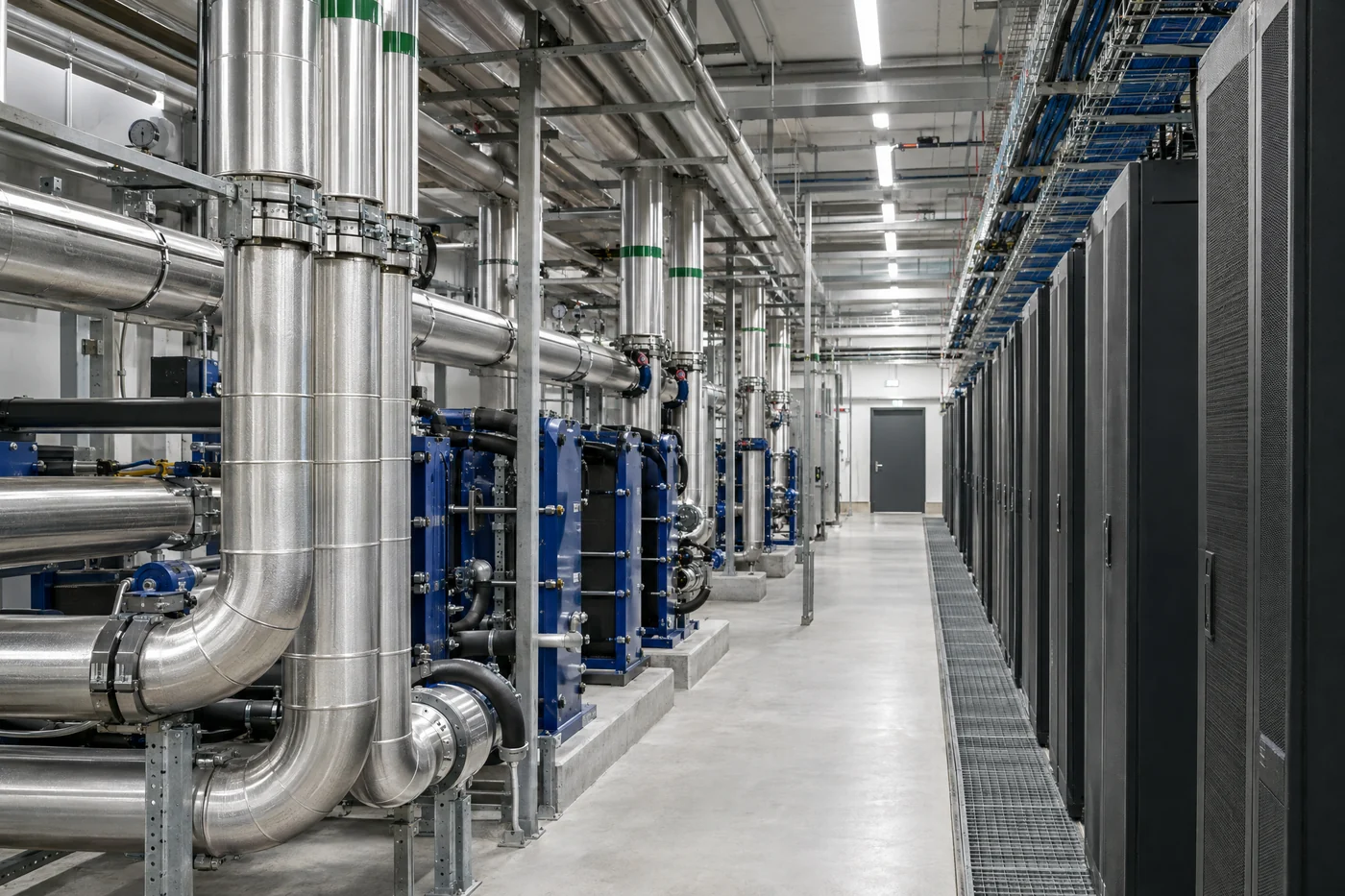
Data center construction has now become like airplane assembly: it is a "box" on the outside, but a critical infrastructure on the inside, where you can't fix a mistake afterwards on a weekend. If you screw it up, it won't be "inconvenient", but the service will stop, the contract will fall, and your reputation will burn.
And while the Hungarian construction industry fluctuates in the classic segments, the demand for digital infrastructure in Europe is pushing up data center capacities at a record pace. By 2025, for example, according to CBRE, a record amount of new capacity was expected to arrive, specifically due to AI and cloud demand. The only problem is: the market grows faster than the know-how (and in many places faster than the electricity and network connection).
1) The first mistake: "The general contractor will also solve this"
He won't. More precisely: the concrete, wall, and roof parts may be yes. But that's not where the data center fails.
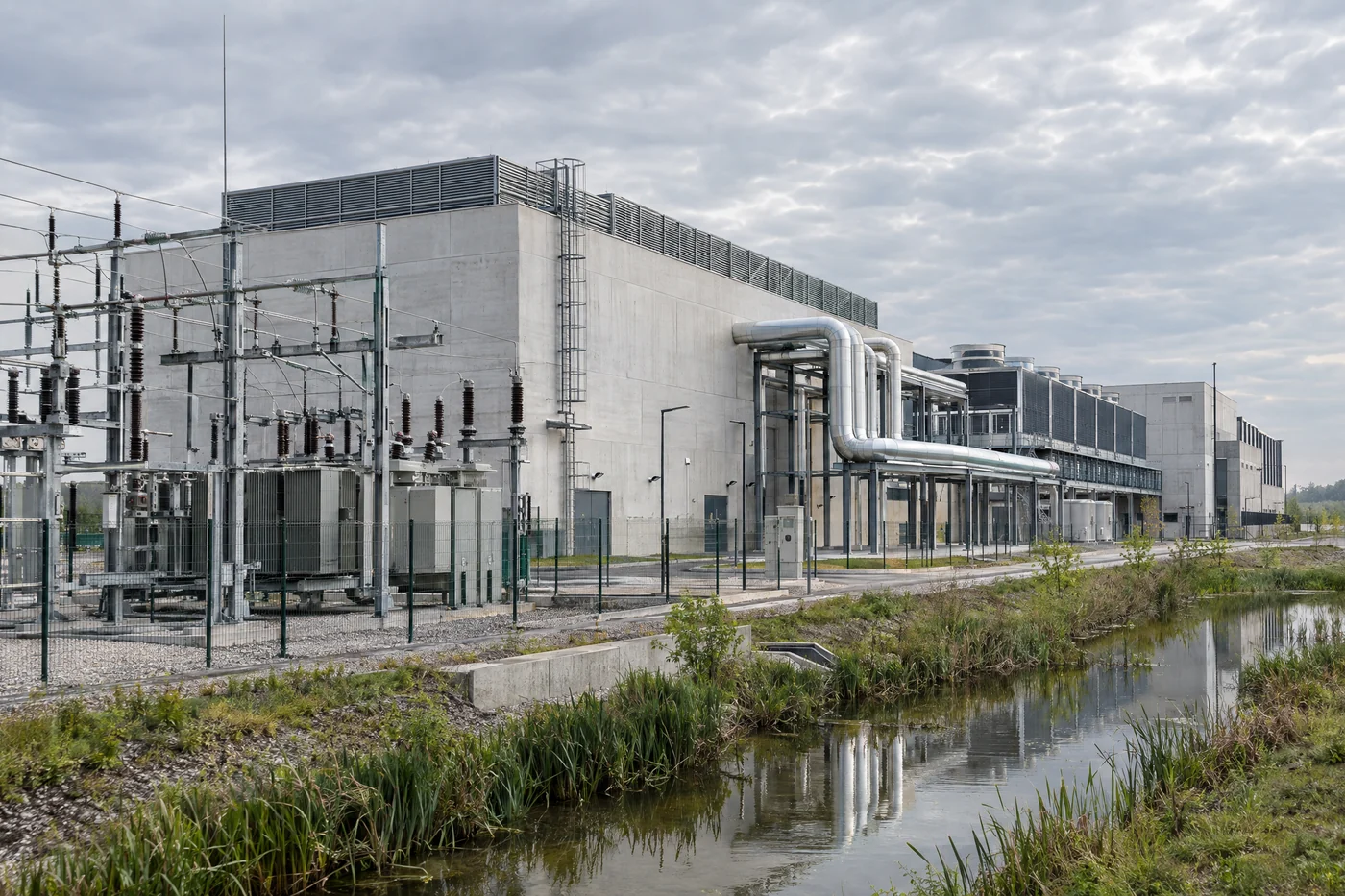
The data center is actually a machine packed in a building:
the value of mechanical engineering and electrical systems often exceeds its "box",
Redundancy should follow the required availability. N+1 provides one additional unit beyond the capacity needed, while 2N provides two full-capacity systems. Topology, isolation and maintainability matter as much as equipment counts.
Commissioning verifies system performance. Before handover, checks should cover not only individual equipment but also coordinated operation and responses to defined failure scenarios.
If someone can only say that "we do good PUE", but cannot talk about failure modes, isolation, BMS integration and operational discipline after handover, then he is not a data center contractor - he only works around data centers.
2) The second mistake: "Then the air will take it away"
At high IT power densities, required airflow and fan power can become limiting factors for air cooling. Select the approach using actual heat loads and whole-system energy demand.
The rise of liquid cooling is not a fad, but physics: ASHRAE TC 9.9 describes in a separate white paper why liquid solutions are spreading in mainstream data centers.
PUE: the electricity bill does not like to argue
PUE is the ratio of total data centre energy use to the energy used by its IT equipment. It describes facility-level overhead relative to IT demand. It does not replace separate assessments of water consumption or the carbon intensity of electricity.
PUE comparisons need consistent measurement boundaries, periods and operating conditions. Climate, utilisation and availability requirements affect the result; one number alone cannot describe overall data centre performance.
3) Cooling technologies: it is not decided by marketing, but by feasibility and operation
With cooling, the question is not whether it is "modern", but whether:
can it be installed cleanly (dust, dirt, discipline),
can it be serviced without stopping,
and is it fault-tolerant (leakage, valves, sensors, automation).
A) Air cooling (classic)
It can work for lower densities, but these traps are typically designed:
false floor and air losses (seals, joints),
coordination of cold/hot corridor closure with fire protection,
lots of fans = more energy and more points of failure.
B) Direct-to-Chip / Direct Liquid Cooling (D2C/DLC)
The "halfway" reality: you cool the critical chips with liquid, the rest with air. Here the level of construction work jumps:
CDU (Coolant Distribution Unit): separation of primary and secondary circuits, adjustment, redundant pumps, stable power supply.
material and corrosion discipline: if you mix the metals/materials wrong, the system will take revenge later.
leakage management: "no leakage" is not enough. It must be detected, localized and automatically isolated (connected to a BMS). Leak detection solutions and monitoring are not extras for liquid, they are basic.
C) Immersion (immersion cooling)
This is no longer "data center engineering", but data center logistics + statics + fluid management. The critical point is often not the cooling principle, but:
floor load and load distribution (often reinforcement for brownfields),
craneability, service protocol,
the cleanliness of the liquid and the discipline of handling it (if dust gets in, it's not a "little problem", it's an expensive problem).
Regulatory considerations for cooling
Those who install data center cooling after 2025 will not have enough technical knowledge: regulatory compliance is also a project risk.
Hungarian regulation: March 1, 2025.
The National Climate Protection Authority issued a separate information sheet on the domestic changes effective from March 1, 2025, and also published detailed materials. The essence of the changes in brief: the focus is broadened, data provision is tightened and the training/registration logic is transformed. NAK also published a summary of this.
Legal background page:
LXXXVII of 2024 law on climate gases
458/2024. (XII. 30.) Government decree on the implementation framework
EU level: F-gas regulation 2024/573
According to the summary of the European Commission, Regulation (EU) 2024/573 was adopted on February 7, 2024 and will apply from March 11, 2024. This means in practice: whoever chooses a cooling system today must think in advance about what kind of refrigerant, what kind of compliance, what kind of operational risk and what kind of future-proofness. (No, it is not decided by the prospectus.)
5) Sustainability: the data center is not only a consumer - it is also a heat producer
EU data centre reporting uses installed IT power demand as a key threshold. Projects at or above 500 kW should check the applicable reporting requirements from the design stage.
Waste heat: if there is liquid, the heat is "more usable"
With liquid systems, heat at a higher temperature is often available, which improves the chances of utilization. It's not an automatic money printing machine, but it's a serious possibility - and in Europe, there has already been a recent (2025) review of the literature on the integration of data center waste heat into district heat. In Budapest's district heating context, network development directions (e.g. "heat ring" type backbones) have been running for a long time, which in principle favors the connection of large, stable heat sources - but this requires a business agreement, technical connection and operational priority (the first is always the protection of the servers).
Investor checklist
If they cannot answer these 8 questions, they are not there yet:
What redundancy is there (N+1/2N) and how is it tested at handover?
What is the cooling strategy now and 3 years from now (for AI density)?
Is leak detection + automatic isolation integrated into BMS?
Who is responsible for air conditioning gas admin/registration and qualifications?
What is the commissioning scenario (failure scenarios, load tests)?
Is the risk and schedule of mains power connection managed?
Is there a real PUE target and what is the tool for it (not just "will be good")?
Waste heat: is there a realistic utilization concept and partner, or is it just PR?
Closing
Data centre projects need collaboration that considers electrical and building-services systems together with operating requirements.
Those who recognize this in time and do not order a "hall", but an operating infrastructure, not only get a more stable system, but also operate it cheaper in the long run.
Sources
European data center capacity record in 2025 (CBRE/Reuters).
European data center capacity shortage, AI demand (Reuters).
Grid connection delays and risk (ITPro).
Uptime Institute: 2023 industry average PUE ~1.58.
ASHRAE TC 9.9: Liquid cooling in mainstream data centers (white paper).
NKVH: changing domestic F-gas regulations from March 1, 2025 + detailed PDFs.
NAK summary of important changes.
year LXXXVII law on climate gases; 458/2024. (XII.30.) Government decree.
European Commission: Application of F-gas Regulation (EU) 2024/573 from 11.03.2024.
Data center KPI reporting / EED interpretations (summaries).
Data center waste heat district heat integration - 2025 literature review.
MAIN RANGE "heat ring" context (network developments).
Toldy Tech: data center services (planning, redundancy, implementation).